The human
How leaders perceive, decide and relate under pressure.

Organisations adapt when their people can. reCompass is a framework on leadership and organisation that connects how leaders think and relate to the systems they build, and to the capabilities that emerge from both.
See the frameworkHow leaders perceive, decide and relate under pressure.
The strategic intent, roles, networks and routines that shape behaviour.
Trust, collaboration, creativity and learning. The raw material of adaptability.
Most transformations are designed in strategy, structure and process. Most of them stall in the human layer: in how people read what is happening, whether they trust each other enough to say it and whether the organisation can learn faster than its environment changes.
AI, geopolitical volatility and constant restructuring are raising the stakes. The organisations that cope will not be the ones with the best plan. They will be the ones whose people can work together when the plan stops working.
Human qualities are not soft. They are trainable, observable and they show up in performance.
Four layers, read from the ground up. Each depends on the one beneath it.
An organisation that can read change and move with it, again and again.
These cannot be mandated. They emerge when the first two layers are aligned.
Purpose and direction people can actually use to make decisions.
Clear ownership that frees people to bring more than the job description.
How information, trust and influence flow within teams and across them.
The meetings, rituals and habits where culture becomes real on a Monday morning.
Seeing what is actually happening, not what you assume or fear. The capacity to respond rather than react.
A secure base for leading under pressure: holding boundaries, recovering from setbacks, sustaining performance without depletion.
Reading people accurately and responding with care and candour. The ground of trust and psychological safety.
It is a spiral, not a project. Healthier systems deepen the human work, which in turn makes better systems possible.
Boards are asked to assess and monitor culture. Few have a way of seeing it. The framework turns into four questions.
We learn we should be good leaders, but we are not always given the tools to lead with humanity. This course gave us that. I feel much better prepared to go back to the office and apply what we have been learning.
It is a luxury to give ourselves the time to reflect, to connect within and with others, to exchange and get more depth on our own emotions. I really treasured the time together and would love to keep these conversations flowing.
I am very grateful that I took part in this training. It was very transformative. I was really surprised by the power of doing, and not only feeling, when we talk about compassion cultivation and compassionate leadership.
I work selectively, with a small number of leaders and organisations.
One-to-one work with senior leaders in professional services facing growth, complexity or a step into a bigger role, including across Brazil, the UK and Europe.
Leadership programmes on compassion science and adaptive organisations, delivered in English, Portuguese and Spanish, including with the Center for Compassionate Leadership and 41 North Business School.
Talks for leadership teams and conferences on what it takes for an organisation to adapt.
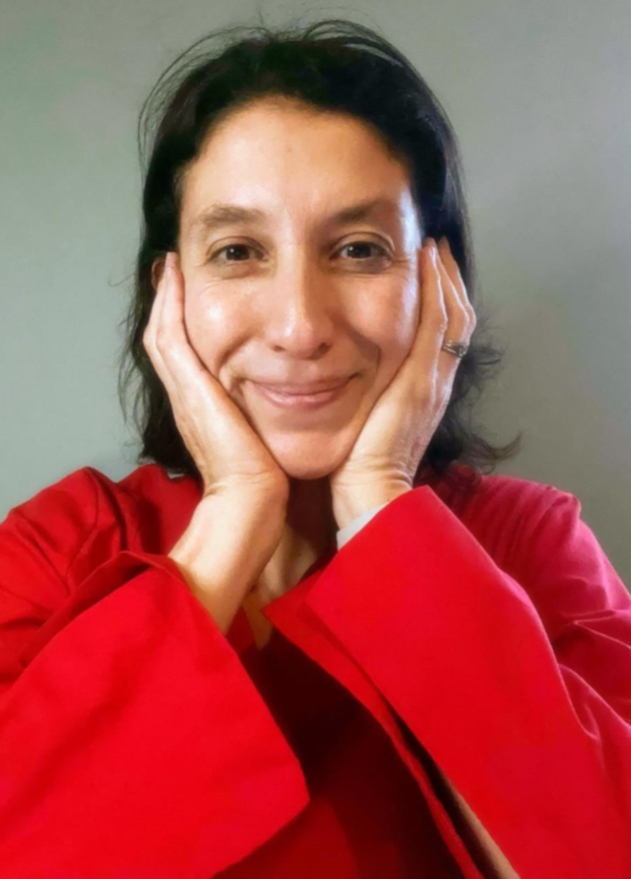
Janaina is a strategist and advisor on leadership and organisation, with more than 25 years building, running and transforming organisations across Europe and Latin America.
She spent 18 years at Integration Consulting, becoming Managing Partner for Europe and a member of the Global Board. She built the European operation from zero to over £3 million and led transformation and capability programmes for clients including L’Oréal, Diageo, Unilever and Sanofi. She has since served twice as COO, as co-founder of a fintech and in an M&A advisory firm, and as Non-Executive Advisor to Trust & Nurture Partners, a professional services consultancy.
Alongside that career sits a deliberate investment in understanding people: an 11-month Compassion Cultivation programme at Stanford, interpersonal neurobiology with Dr Dan Siegel and a teaching certification from the Center for Compassionate Leadership. She holds an MSc in Strategy and Leadership from London Business School (Sloan Programme) and is a long-standing mentor to LBS students and entrepreneurs.
reCompass is where she developed her framework on adaptive organisations, testing it through leadership programmes, more than 50 research interviews on how organisations respond to people in crisis and her own operating roles.




For mentoring, programmes or a conversation about your organisation.